
Why Soft Skills Matter More Than Marks: A Parent's Guide to Raising Confident Kids & Teens in India
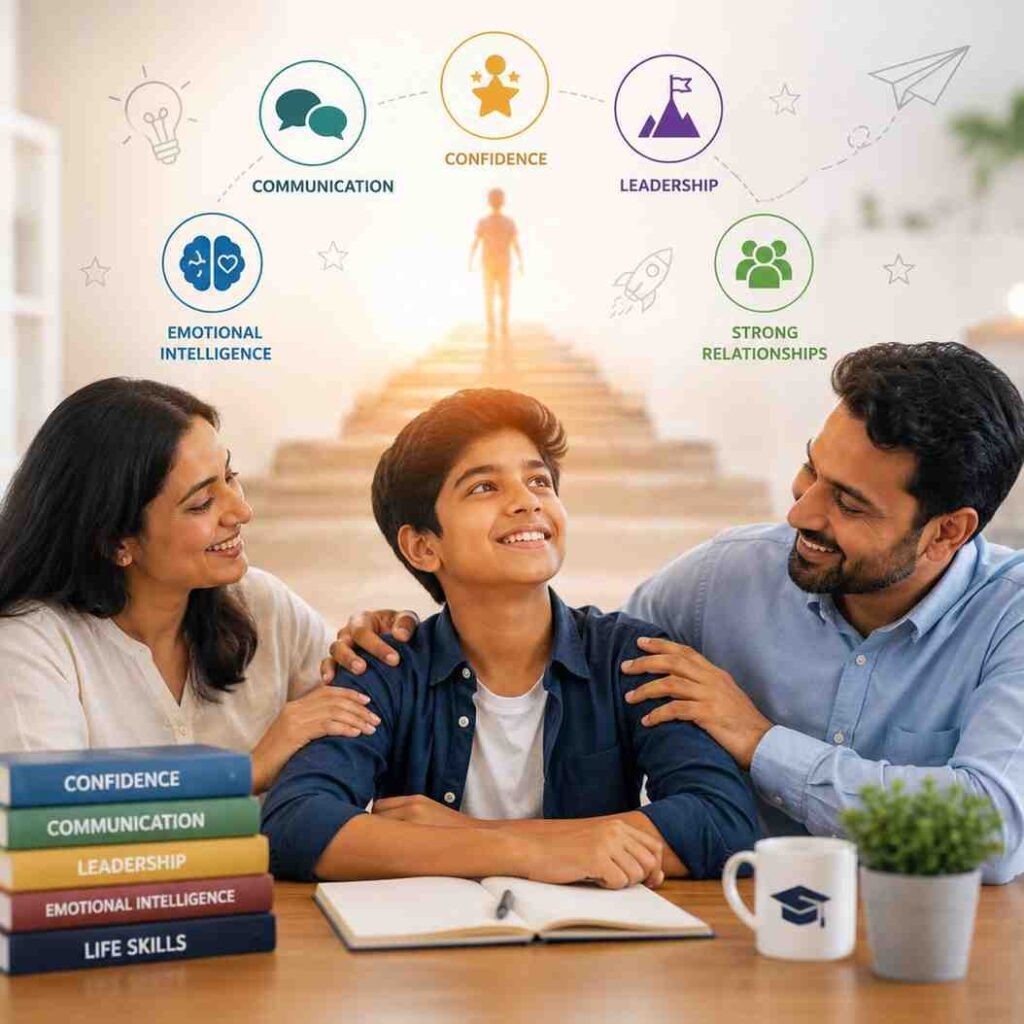
Every year, millions of Indian parents obsess over one number — the percentage on a report card. Yet ask any HR manager, school counsellor, or successful professional what actually shaped their journey, and marks rarely top the list. That’s the quiet truth behind soft skills for kids & teens in India: the abilities that help a child speak up, bounce back, and connect with people are often what decide how far they go — not the score they got in Class 10 maths. At ACTION DnA, we work with families across India who are beginning to ask a different question — not “how much did my child score?” but “is my child ready for the world outside the exam hall?” This piece is for exactly those parents.
Marks Get You In The Door. They Don't Keep You There.
Think about it honestly. A student who tops every exam but can’t hold eye contact during an interview, can’t collaborate on a group project, or crumbles under pressure — where does that get them? Meanwhile, a moderately scoring child who communicates well, takes initiative, and stays calm under stress often ends up leading the room. Companies aren’t hiring transcripts anymore; they’re hiring people who can think on their feet and work with others.
That single shift in perspective is why soft skills for students need to sit right next to homework and tuition on every Indian parent’s priority list — not as an extra, but as the main event.
So What Are We Actually Talking About When We Say "Soft Skills"?
Soft skills aren’t a subject you can mug up the night before an exam. They’re the human abilities a child picks up through real experience — talking to strangers, losing a game gracefully, standing in front of a class, negotiating with a sibling. Broadly, they cover:
- Speaking confidently and listening well
- Belief in one’s own abilities
- Reading and managing emotions
- Working well within a group
- Thinking through problems logically
- Taking charge when needed
- Managing time and staying disciplined
Put these together and you get the real building blocks of personality development for kids & teens — kids who aren’t just academically sound but genuinely capable of handling life.
The Real Reasons Soft Skills Outweigh Marks
Confidence Does What A Percentage Never Will
A child who can say what they think, take a “no” without falling apart, and hold their ground respectfully will go further than one who simply memorises well. Confidence building for kids & teens has nothing to do with volume or bravado — it’s about a child feeling steady in their own skin, whether they’re answering a surprise question in class or pitching an idea to adults twice their age.
Communication Is The Skill Behind Every Other Skill
A brilliant idea, poorly explained, goes nowhere. Whether your child is presenting a school project, sitting for a college admission interview, or one day pitching a business idea, how they say something matters as much as what they know. Communication skills for children are what turn knowledge into influence — something no amount of textbook revision can substitute.
Real Life Doesn’t Come With A Syllabus
Exams test recall. Life tests judgment. Knowing how to manage pocket money, handle disappointment, make a tough decision, or organise your own day — these life skills for kids & teens prepare children for situations that no chapter or unit test ever covers.
The Career World Is Rewarding People Skills, Not Just Percentages
Ask anyone hiring today and they’ll tell you the same thing: technical knowledge gets you shortlisted, but people skills get you the job — and keep you in it. This is precisely why soft skills are important for students, regardless of whether they’re headed into engineering, medicine, design, or business. Marks open the first door. What happens after depends on everything else.
Is Your Child Quietly Struggling With This?
Some children show it clearly. Others hide it well. Here’s what to watch for:
- Goes silent or freezes when asked to speak in front of others
- Finds it hard to make or keep friends
- Gets unusually nervous before tests, interviews, or performances
- Bottles up feelings instead of expressing them
- Waits for a parent to make even small decisions
- Doubts themselves despite doing well academically
Recognise a few of these? It might be worth exploring proper soft skills training for children — the kind that happens outside the classroom, in real practice environments.
How To Build Confidence In Children — Starting At Home
You don’t need a special degree to start this. A few consistent habits at home go a long way toward answering how to build confidence in children long-term.
Let Them Finish Talking
Resist the urge to jump in or correct mid-sentence. Ask questions like “What was your take on that?” rather than ones with a simple yes-or-no answer. This alone teaches kids that their opinion is worth voicing.
Praise The Attempt, Not Just The Outcome
When effort gets noticed as much as results, children stop fearing failure and start enjoying the process of trying. That mental shift matters more than any single grade.
Hand Over Real Decisions
Let them plan a weekend outing or manage a small budget. These everyday responsibilities quietly build the life skills for kids & teens that classrooms rarely touch.
Let Failure Happen Without Judgment
A child who’s allowed to fail — and see that it’s survivable — builds resilience far faster than one who’s shielded from every setback.
Push Them Toward New, Slightly Uncomfortable Experiences
Debate clubs, team sports, group activities, structured personality workshops — anything that nudges a child outside their comfort zone helps confidence grow naturally.
Quick Parenting Habits That Raise Confident, Grounded Kids
A short list of parenting tips for confident kids & teens worth applying starting this week:
- Model it yourself – Kids notice how you handle a bad day far more than what you say about handling one.
- Skip the comparisons – Measuring your child against a cousin or classmate does more harm than good.
- Actually listen – Give attention to what they say, not just how they scored.
- Keep expectations realistic – Constant pressure breeds anxiety, not achievement.
- Consider expert-led programs – Sometimes an outside environment builds skills faster than home alone can.
Why Structured Training Often Works Better Than DIY
Home can only do so much. A structured soft skills training for children environment gives kids something parents can’t always replicate — a space among peers, guided by trained facilitators, where speaking up, leading a group, and handling feedback become regular practice rather than rare, high-stakes moments. That repetition is what turns nervous first attempts into genuine confidence.
At ACTION DnA, our programs are built specifically around what Indian kids and teens need — practical confidence-building, real communication practice, and personality development that goes far beyond a worksheet. We know the pressure Indian households carry around academics, and our focus is on the human side that report cards leave out entirely.
Marks Fade. Confidence Stays.
A percentage on a mark sheet is temporary. The ability to speak up, adapt, connect with people, and handle setbacks — that stays with a child for life. The importance of soft skills for children isn’t some passing trend in parenting circles; it’s becoming a basic requirement for the world today’s kids are growing into.
If you’re ready to help your child build something that outlasts a single exam, ACTION DnA is here to walk that path with you.
Curious what confident, capable really looks like in your child? Explore ACTION DnA’s soft skills and confidence-building programs built for Indian kids and teens.